

Search engine optimization (SEO) is about more than ranking high in Google search results.
According to SEO expert Jeff Riddle, it’s also about “establishing authority, attracting eyeballs, engaging with a target audience via keyword-rich content, [and] inducing some action by searchers.”
One way to do this is through the effective use of “meta tags.”
Meta tags are snippets of HTML code or text that describes a website’s content. Meta tags help both search engines and potential visitors clearly understand what to expect from a web page. When written well, meta tags can help differentiate a website, attract visitors, and invite action. They are a useful part of SEO strategy.
Let’s get metaphorical for a minute.
Imagine a website as a fancy restaurant. It has delicious food (content) and inviting decor (web design), but how do people find the restaurant in the first place? This is where SEO and meta tags come into play. Meta tags help search engines know what a website is serving and which customers they should serve. They tell customers what they can expect from their experience. Well-worded meta tags are like mouthwatering descriptions and tempting keywords that make customers eager to try the food or make them hungry for more (in this case, for more content from a website). Additionally, meta tags also provide promotional opportunities and a place to invite and encourage action such as “Click here to learn more!” or “Call this number!”
Crafting the text for meta tags can, initially, take some effort and occasional maintenance to be sure the tags are still relevant, but the work is worth it to effectively differentiate a site and attract visitors.
There are many types of meta tags, but the most useful are the title tag and the description tag.
Consider what is displayed on a search engine results page: a URL, a clickable page title in blue, and a snippet of text.
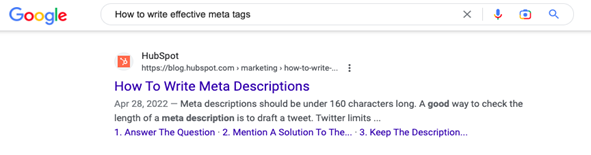
The title tag is that big blue text. It is a brief — five to ten words (or 60-72 characters) — statement of what a web page is about. It’s essentially a headline and, as such, needs to be both appealing and descriptive. Experts advise against using generic names or vague words but encourage using numbers and modifiers where possible. A title tag should read like a sentence and include keywords or phrases, in order of relevance, along with the company’s name. A good formula is as follows:
First keyword…Second keyword | Company Name
It is tempting to dump as many keywords here as possible to boost SEO, but using too many or irrelevant keywords can hurt SEO. Additionally, it’s best to avoid duplicating tags for multiple pages. Writing unique tags for each page helps search engines better read and index a site for searchability and provides more opportunities to use important keywords. The title tag can affect ranking and shows up in a visitor's browser tab and in the anchor text when a visitor shares a site online or via social media channels. Make it count!
Description tags expounds in greater detail about a page’s content and invites action. Description tags show up as text under the URL and meta title and in social media channels when a visitor shares a link. Ideally the text should be between 130-156 characters (ideally less for mobile) and include a call to action. Notice in the example above how the meta description begins to answer the question in the search query while including several enticing links for the visitor to click. Other calls to action might be: “learn/discover/explore…” “sign up now for exclusive offers” or “view product details.”
There are other useful meta tags. For example, the robots tag tells search engines whether to index a page, while header tags improve the website's structure, making it easier to understand and navigate. Adding alt-text tags to site images make the images “readable” and searchable. If a site has an e-commerce component, a canonical tag will help search engines know which among the products page is the main one. Twitter cards and open graph tags will not affect SEO, but can improve a site’s shareability across social media. Finally, including a viewport tag will ensure your site is mobile friendly — especially important considering most searches are initiated from a mobile device.
In summary, meta tags supply an opportunity for sites to stand out and attract visitors. They help both search engines and visitors get a better idea about the content, value, and experience users can expect from a site and from the business it serves. When crafting meta tags, highlight value and opportunity. Invite action. Avoid using irrelevant keywords or duplicating tags. Use emotive and engaging language, while following best practices for content and length. Most importantly, write for the visitor.
You can find more advanced meta tags and tips on writing in HTML here and here.