
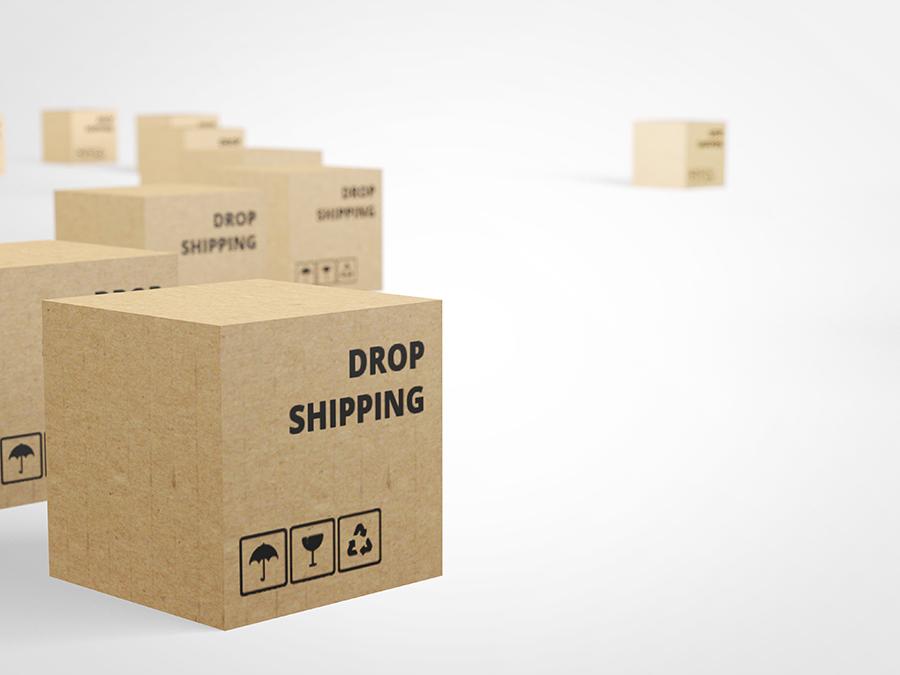
Understanding how Dropshipping works is much easier than you imagine.
Dropshipping is a distribution model in which it is not necessary to have inventory to sell products.
When a dropshipping store sells a product, it goes to a third party to buy that product, and that third party will be in charge of shipping it to the final consumer, so that initial store never had contact with what it sold.
In a traditional ecommerce, the seller has a certain number of units of a product in stock, and when the purchase is made, he sends it directly. While the Dropshipping model has become a lifesaver for thousands of people. It consists of the purchase and delivery of orders, in which there is a transaction channel made up of the buyer, a merchant and a supplier. Here the entrepreneur functions as an intermediary, but never manipulates or sees the product in question.
Dropshipping is a business model in which a store owner processes orders through a third-party supplier/seller. The dropshipping provider is then responsible for shipping the order directly to the consumer.
With this model, the retailer (seller) does not inventory the merchandise, but rather passes the customer's information to the supplier to ship on their behalf. The retailer is thus freed from the burden of having to maintain stock or own a warehouse or inventory.
Before embarking on this method of generating income, it is important to ask yourself several questions such as: what is it? What does it consist of? What benefits does Dropshipping have? And what are its advantages and disadvantages? Here we tell you.
How does Dropshipping work?
It is the creation of an e-commerce in which the products or services offered are not from the store specifically. Rather the website, or droppshiper, functions as a link between the customer and the producer; The latter is responsible for delivering the purchase to its final destination.
Although this market is somewhat saturated, the fear of buying online has increasingly disappeared and this makes ecommerce dropshippers multiply around the world and continue to be very functional for buyers, since they prefer to pay for how accessible they become. your purchases through this type of business.
You may be interested in: 5 ways to create a parallel business to your work
Where was this attractive e-commerce model born?
Many identify the origins of dropshipping in catalog sales that became popular in the 60s and 70s. However, it is worth highlighting the case of Nick Swinmurn, who, in 1999, saw in the buying and selling of shoes an opportunity to business, as he went to a store, took photos of the models there, shared them and, charging a commission on the original price, began taking orders from dozens of customers whom he managed to convince.
After consolidating his business, he created his own store called Zappos and became a footwear manufacturer in the United Kingdom, but its bases were always the same as those of dropshipping e-commerce today.
If this type of Internet commerce catches your attention, it is important to be clear about the good, the average and the bad of immersing yourself in this world.
Discover: The evolution of the Internet in Colombia and its vitality for business
What benefits does dropshipping have?
- Offers a comfortable and friendly experience for the user.
- There is no need for an inventory or physical point.
- The dropshipper will not have to worry about returns or internal shipping.
- There is a great opportunity for growth.
- To start you do not need a high capital.
- Allows you to opt for external order logistics.
What are the disadvantages that I should take into account if I want to open a dropshipping business?
- Depends on a supplier.
- By not having contact with the product, it is not possible to review its quality and functionality.
- There is a low profit margin.
- The competition index is high.
- When selling as an intermediary, the process of generating trust in customers will be slower.
- Not having a trusted supplier could affect order control.
What do experts say about dropshipping?
Hernán Restrepo, who is currently a teacher and Digital Content Manager at IDB Invest, defined this distribution method as follows:
“The dropshipping method is the result of the digital age in which we live. Thanks to the growth of e-commerce platforms such as Amazon or Mercado Libre, it is increasingly common for companies to sell products online that they do not necessarily have in stock. It is a more efficient way of managing Internet commerce, but it requires an enormous ethical commitment and transparency from the seller to the buyer, since it is necessary that the product being sold be available for delivery, even if it is not in a warehouse. centralized.”
If you have already made the decision and are going to opt for the dropshipping model, keep these recommendations in mind…
- On your page only put the products that you really have. For some experts in Digital Marketing, like Carlos García, adding too many can become harmful, since “they fill with shadow the articles that are most likely to be published.”
- When opting for social networks as a promotion channel, get advice and look for influencers with a high and proven interaction capacity.
- Make sure your supplier has a good reputation and can give you assurance of compliance.
- Establish a clear niche and try to focus on it.
- In times of high demand, create attractive promotions.
Last but not least, be very clear that “if you look closely, most successes took a long time,” just as Steve Jobs, founder of Apple, said.