

Key Takeaways
- Keyword-aligned gTLDs can reinforce search relevance. Controlled testing found that descriptive domain extensions often outperformed traditional .com and .net domains when they closely matched search intent, helping Google better understand what a website is about.
- Your domain should be part of your SEO strategy. While content, technical SEO, and backlinks remain essential, choosing a descriptive, purpose-driven domain can improve clarity, support early visibility, and give new websites and targeted campaigns an additional competitive advantage.
For years, the role of domain names in SEO has been treated as settled: Content matters. Links matter. Technical performance matters. But your domain extension? That’s just a suffix . . . right?
Not quite.
When the internet expanded beyond .com into hundreds of descriptive, industry-specific extensions, a new question emerged: can the domain you choose actually influence how your site performs in search?
More specifically, can a keyword-aligned domain – like a .design, .club, or .fit – help reinforce what your site is about in a way that impacts visibility in Google?
Until recently, most answers to that question were based on assumption, correlation, or anecdotal evidence.
So instead of speculating, we tested it.
A New Look at an Old Question
In partnership with SEO expert and researcher Kyle Roof, we set out to better understand how generic top-level domains (gTLDs) perform in search. Using a controlled testing methodology designed to isolate ranking variables, two studies were conducted:
The gTLD SEO Performance Study, which compared descriptive gTLDs against traditional .com and .net domains
The gTLD & URL Length Ranking Study, which explored whether domain length or TLD length influences rankings
Unlike traditional SEO research, which often analyzes large datasets without controlling for variables, these studies were designed to answer a more precise question:
When everything else is equal, does domain structure influence search performance?
To find out, each test site was built under identical conditions: same content, same technical setup, same indexing process. This allowed domain-level differences to be isolated and tested.
What the Data Revealed
Across both studies, one theme emerged consistently:
Domain choice is not neutral; it can play a meaningful role in how a site performs in search.
Here are the key takeaways:
1. Keywords Matter More Than Expected
One of the clearest insights came from how Google appears to interpret domain names based on searched keywords.
In the first study, where we tested descriptive gTLDs against their traditional .com/.net counterparts, we ran two tests:
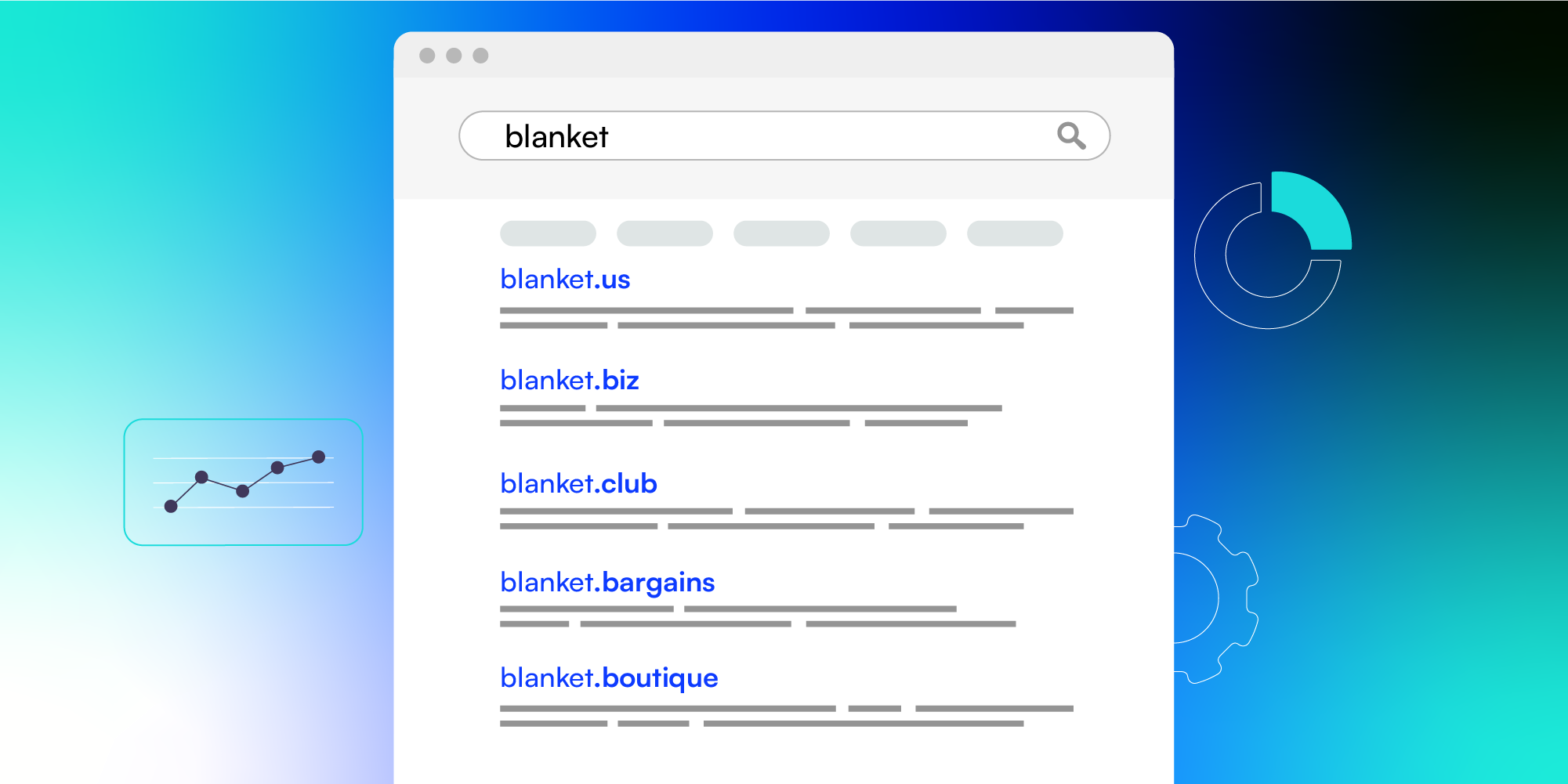
Using Partial Match Domains (PMDs): where only part of the query appears in the domain. For example, if someone typed into Google grandma’s woolen blankets from the 20s, the partial-match domain tested was makeblankets.net.
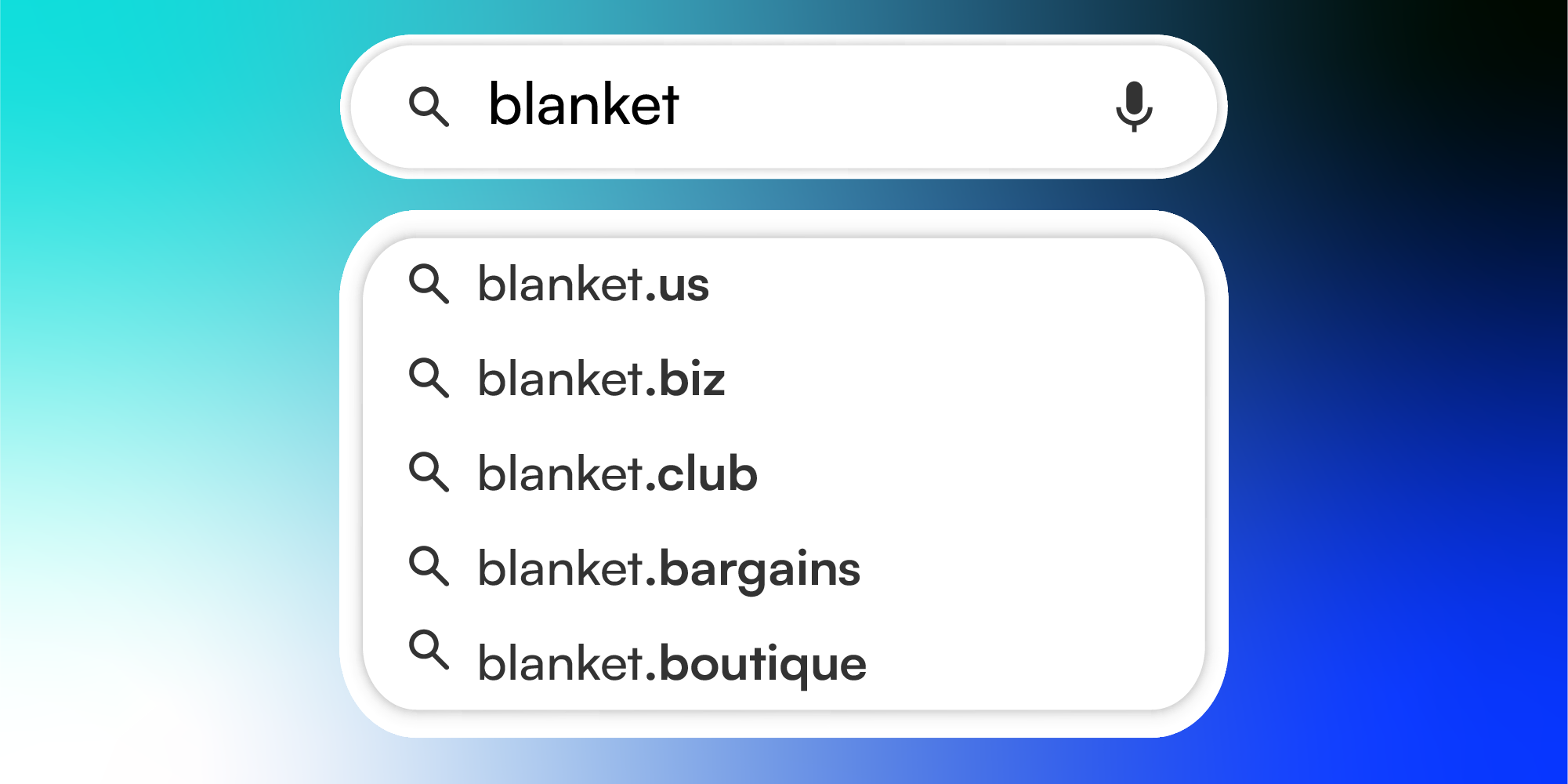
Using Exact Match Domains (EMDs): where the full search query appeared in the domain. Using the same search example, the EMD for grandma’s woolen blankets from the 20s is blanket.club
In tests using PMDs, there was a strong pattern between domains using descriptive gTLDs and their target keyword. Often, those domains:
Ranked higher than their traditional counterparts, or
Were the only domains in their test group to rank at all.
In the tests using EMDs, results were mixed: some domains performed exceptionally well, while others didn’t rank at all.
This suggests that keyword alignment at the domain level can reinforce relevance signals, particularly when the TLD itself contributes meaning to the query.
For example, a domain like blanket.club doesn’t just contain a keyword; it contextualizes it. The extension itself supports the intent behind the search. That added clarity may help search engines better understand what the site represents.
2. What the Data Revealed
In some cases, the TLD wasn’t just supporting the keyword – it was completing it. This is often referred to as a “domain hack,” where the extension forms part of the full search term. When executed correctly, this can create a highly aligned domain structure.
But the study also revealed an important nuance: Google appears to parse domains linguistically.
In one test, a domain intended to target a plural keyword failed to rank because the TLD created a singular form mismatch. In another, a clean keyword-TLD pairing resulted in a top-ranking position – indicating that the closer the alignment between domain structure and search intent, the stronger the potential signal.
TL;DR: It’s not just about having keywords: it’s about how those keywords are interpreted.
Testing Without Bias: Artificial Keywords
To remove real-world noise entirely, the study introduced a set of invented keywords: terms with no search history, no competition, and no existing content. This allowed Roof to observe how domains performed in near-isolation.
Across multiple tests, descriptive domain extensions that matched the search queries consistently:
Achieved higher rankings
Improved faster over time
Outperformed their .com equivalents
With no historical signals to rely on, domain structure became one of the most visible differentiators. This reinforces the idea that when other ranking factors are neutralized, domain-level relevance becomes more influential.
What This Means for SEO Strategy
These findings don’t suggest that gTLDs are a shortcut to rankings, or that they replace the need for strong content and technical SEO. What they do show is that domain choice can support and enhance your overall strategy.
For New Websites
If you’re launching a new site, your domain is one of the few signals you control from day one.
Choosing a descriptive, keyword-aligned domain extension can:
Reinforce what your site is about
Improve clarity for both users and search engines
Potentially accelerate early visibility
For Growing Brands
You don’t need to abandon your .com to benefit from gTLDs.
Many businesses are using descriptive domains for:
Campaign-specific landing pages
Product or service microsites
Niche keyword targeting
This allows brands to expand their search presence without disrupting their primary domain.
For Agencies and SEO Professionals
The biggest takeaway is strategic: Domain structure should be considered part of your SEO toolkit, not an afterthought. When used thoughtfully, descriptive domain extensions can:
Strengthen keyword alignment
Improve relevance signals
Support early-stage performance
But they work best when combined with the traditional strong SEO fundamentals: content, technical back-end data, and authority-building.
A More Competitive Domain Landscape
These insights arrive at an important moment. With ICANN introducing a new wave of gTLDs, the range of available domain options is about to expand again. That means more opportunities . . . but also more competition. Brands that understand how to use domain structure strategically will be better positioned to stand out.
So, does your TLD affect your Google rankings? Based on controlled testing, the answer is: it can.
Not as a standalone ranking factor, and not as a guaranteed advantage, but as part of a broader set of signals that influence how your site is interpreted and ranked.
Keyword-aligned gTLDs, in particular, show strong potential to:
Reinforce relevance
Improve clarity
Support early visibility
In a search landscape where every signal counts, that’s not something to overlook.
The takeaway is simple: your domain isn’t just where your website lives, it’s part of how your website is understood.
And when chosen strategically, it can help you compete more effectively from the very beginning.